Recessed Lighting and Light Fixture Installation
Recessed lighting is the upgrade people notice most in an older house, and the one most often laid out badly. Where the lights go matters more than which lights you buy.
Layout first, then the lights
The common mistake is a grid: lights spaced evenly across the ceiling, lighting the middle of the room and leaving the counters, the walls and the corners dim. A good layout starts from what you do in the room, puts light on the work surfaces and the walls, and uses fewer fixtures to do it.
The other half is the ceiling itself. What is above it decides the job: an open attic is straightforward, a second-floor ceiling or old plaster means fishing wires carefully and patching neatly. Lights touching insulation must be rated for it, and every run gets sized for the dimmer you actually want.
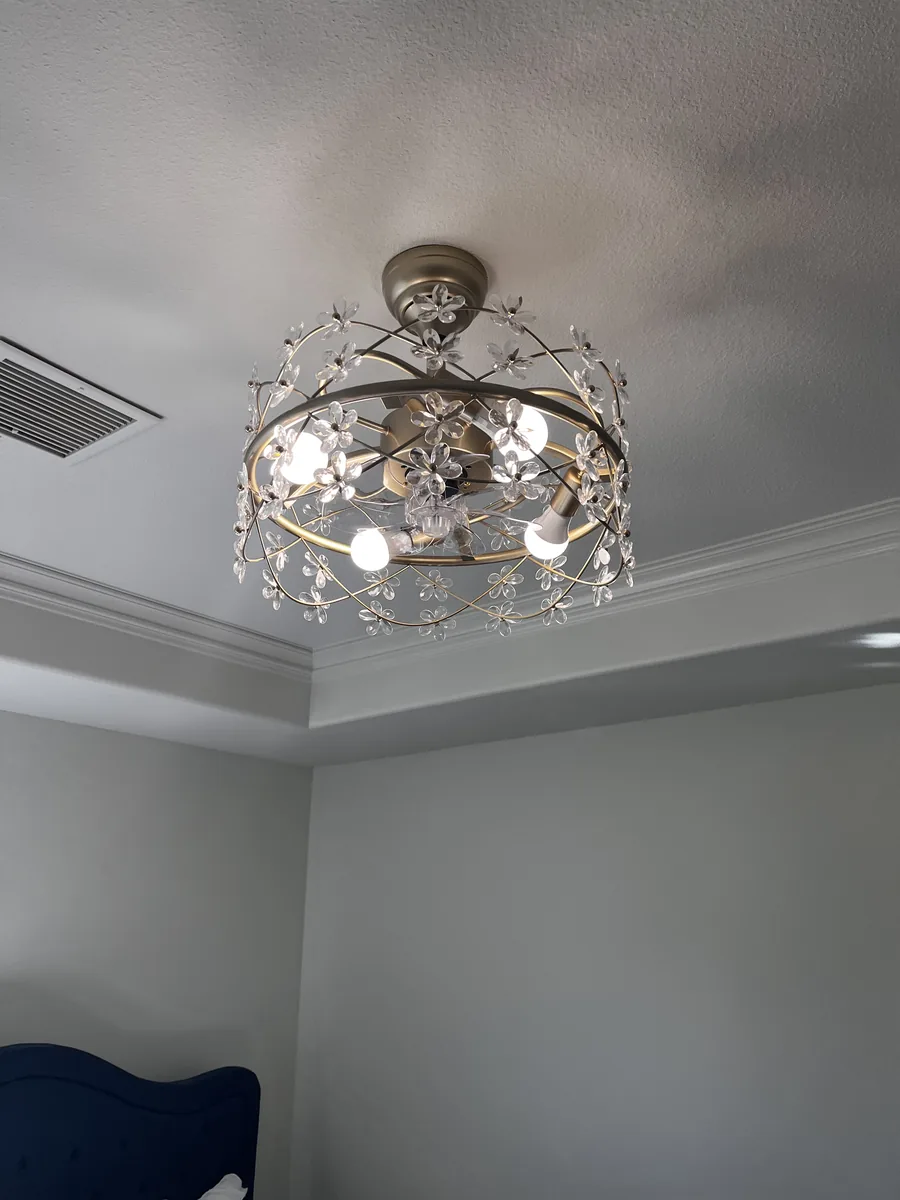
Light fixtures and chandeliers
The same work without cutting new holes: swapping or adding fixtures, and hanging the heavy ones properly.
Light fixture installation
Replacing an old fixture, or adding one where there was none. We check the box is rated for what hangs from it, not just that the wires reach.
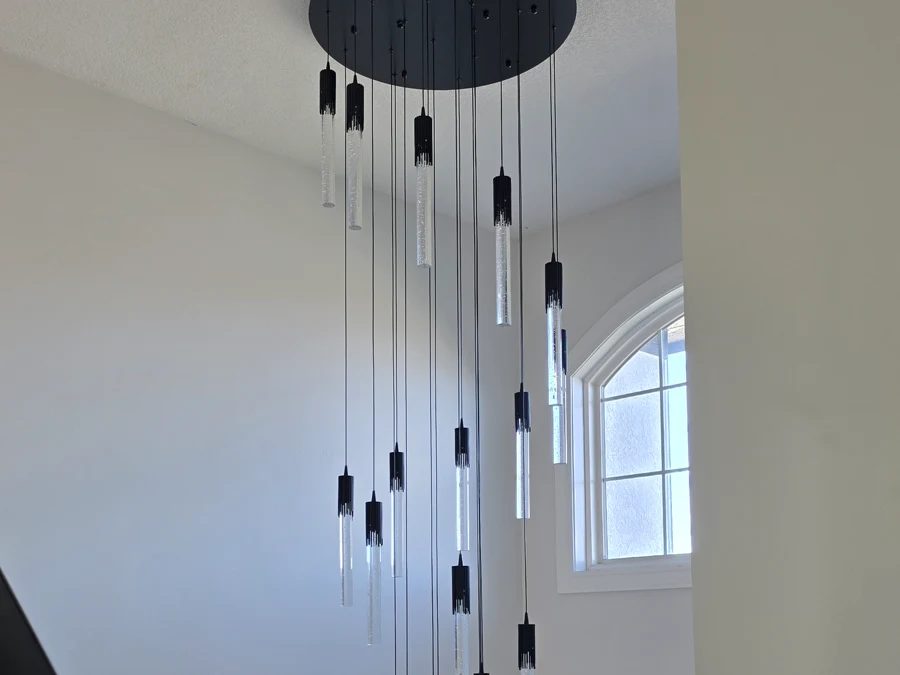
Chandelier installation
Heavy fixtures need a box and a brace rated for the weight, and high entryways need the right ladder or lift. We have hung them in two-story entries.
Dimmers that do not flicker
LED lights and old dimmers often do not get along. We match the dimmer to the fixtures so they dim smoothly instead of buzzing or flickering.
Under-cabinet and accent lighting
Task lighting in the kitchen and accent lighting on shelving, wired to a switch instead of a tangle of plug-in cords.
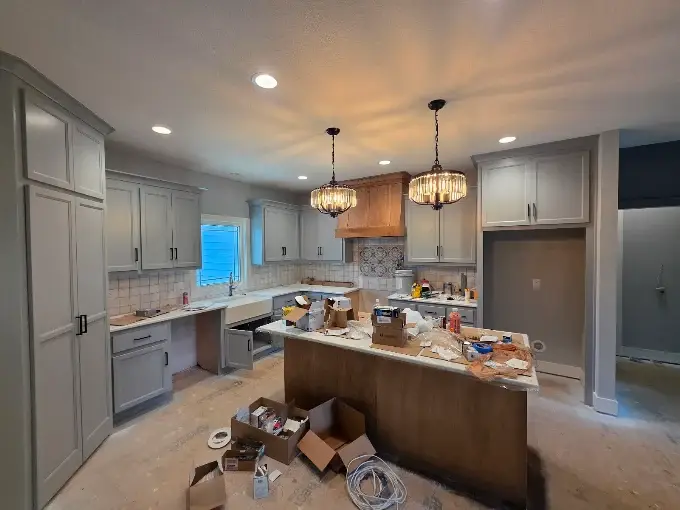
What moves the price of recessed lighting
We do not publish a dollar figure we cannot stand behind. What we can tell you is which parts of the job move the number.
| Job | Relative cost | What drives it |
|---|---|---|
| Recessed lights, open attic above | Moderate | The straightforward version: access from above, short runs, clean cutouts. |
| Recessed lights, no access above | Higher | Second-floor ceilings and plaster mean fishing each run carefully and patching after. |
| Replacing old cans with LED | Lower | Retrofit trims or canless fixtures in existing openings, where the old cans are sound. |
| Swapping a light fixture | Baseline | Same box, new fixture, as long as the box is rated for it. |
| Chandelier or heavy fixture | Higher | A rated box and brace, and a lift or scaffold for tall ceilings. |
Number of lights, what is above the ceiling, and the dimming you want decide it. We look first, then give a flat price.
What to Expect
Walk the room with you
What you do there, where the light needs to land, and what is above the ceiling.
Lay it out
Positions marked before anything is cut, so you see the plan on the ceiling first.
Install cleanly
Tidy cutouts, runs fished through, rated fixtures, dimmers matched to them.
Test and tidy
Every light and dimmer tested, dust cleaned up, ceilings patched where we opened them.
Questions We Get
How much does recessed lighting installation cost?
It depends mostly on access. With an open attic above, it is the lower end; second-floor ceilings and plaster take longer. The number of lights and the dimmers you want are the other factors. We look at the ceiling and give you a flat price before any work starts.
Canless LED or traditional can lights?
For most rooms, canless LED fixtures: they are thin, fit where cans will not, are usually rated for insulation contact, and install through a smaller opening. Traditional housings still make sense where you want to change trims later.
Can you put recessed lighting in a plaster ceiling?
Yes, with more care. Plaster cracks if it is cut carelessly, so we score and cut it cleanly and fish wires between joists rather than opening the ceiling up.
How many recessed lights do I need?
Fewer than most people think, if they are placed well. We lay the room out around counters, seating and walls rather than spacing a grid, and mark the positions for you to see before we cut.
Do you install light fixtures and chandeliers?
Yes, from a simple fixture swap to heavy chandeliers in two-story entryways. Heavy fixtures get a box and brace rated for the weight.
Why do my LED lights flicker on a dimmer?
Usually the dimmer was made for old incandescent bulbs and does not suit LEDs. Swapping to a dimmer rated for the fixtures normally fixes it.
Ready to Get Started?
Call, text, or request a free quote online — we typically respond within one business day.