Why Are My Lights Flickering?
Most flickering is harmless: a bulb that is not seated, or an LED on a dimmer it does not like. Some of it is the one electrical symptom that should not wait, a loose connection heating up where you cannot see it. Where the flicker happens tells you which.
One light, one circuit, or the whole house
Start with how far it spreads. One fixture flickering is almost always that fixture: the bulb, the socket or the dimmer controlling it. Several lights on the same circuit flickering together point to a loose connection somewhere along that circuit, at a switch, an outlet or a splice. Lights flickering all over the house, especially some brightening while others dim, point at the service itself: the main neutral, the meter base or the utility's side of the line.
That last one is the urgent one. A failing main neutral lets the voltage swing between the two halves of the house, which can damage electronics and appliances and overheat connections. If lights across the house get brighter and dimmer on their own, call us or your utility the same day.
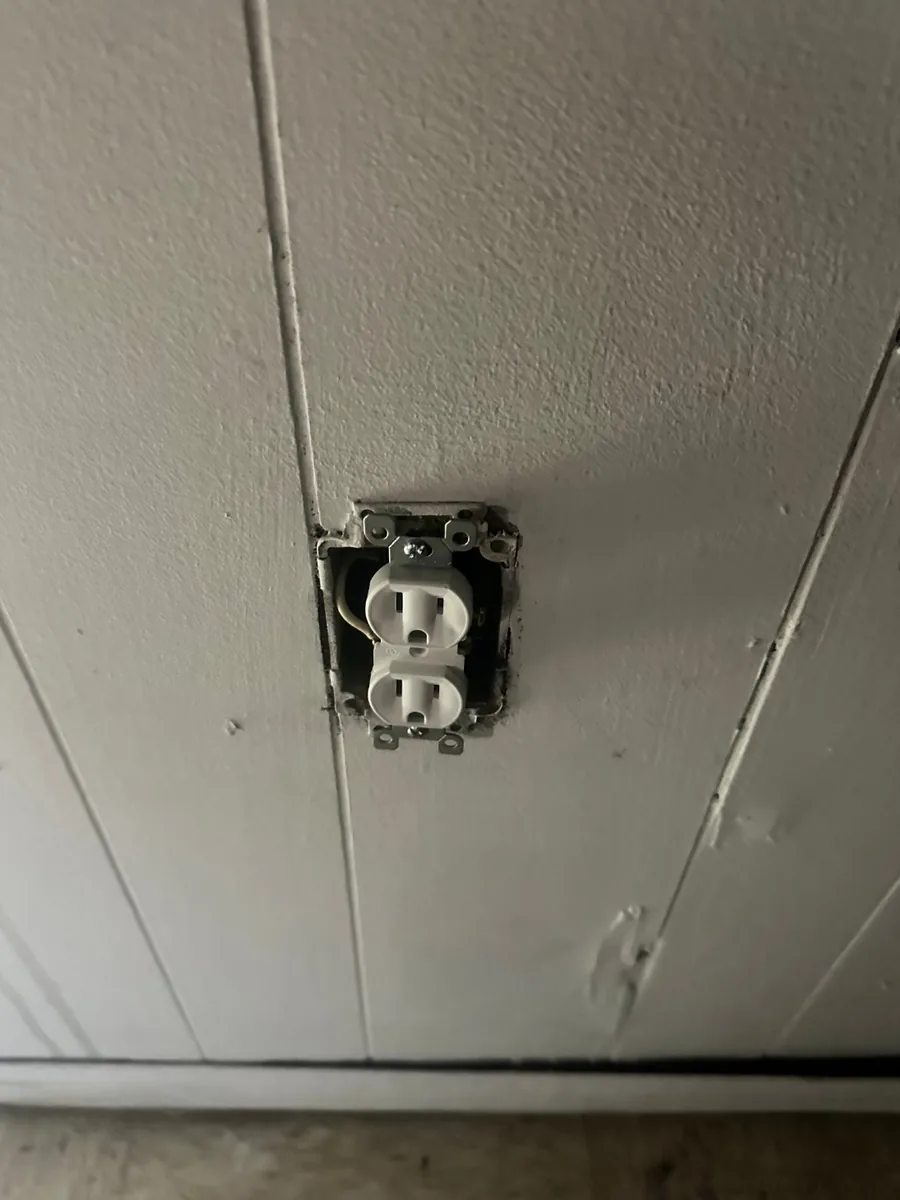
Flickering lights, by where they happen
Where the flicker shows up narrows the cause more than anything else. Start at the top and work down.
| What you see | Most likely cause | What to do |
|---|---|---|
| One bulb or fixture | Bulb or socket | Tighten or swap the bulb. If a new bulb flickers in the same fixture, the socket or the connection at the fixture is worn. |
| LED lights on a dimmer | Wrong dimmer | Older dimmers were built for incandescent bulbs. An LED-rated dimmer with bulbs marked dimmable usually ends it. |
| Lights dip when the AC or a big appliance starts | Motor start-up | A brief dip is normal. A deep or lasting one can mean an overloaded circuit, a loose connection, or a service too small for the house. |
| Several lights on one circuit | Loose connection | Stop using the circuit if anything is warm, buzzing or smells hot. This is a repair, not a bulb change. |
| Lights across the house, brighter and dimmer | Failing neutral | Call the same day and unplug sensitive electronics. In most homes the utility owns the line and the meter; the meter base and everything after it belong to the house. |
| The neighbors see it too | Utility side | Report it to Evergy, or to Independence Power & Light if you are in Independence. |
Anything warm, buzzing, sparking or smelling of hot plastic means stop using it, whatever the table says.
What to Expect
Ask where and when
Which lights, how many, and what else was running. That usually narrows it to one circuit before we open anything.
Check the service when it is whole-house
Voltage on both legs at the panel, the main neutral and the meter base connections.
Follow the circuit
Switches, outlets and splices on the affected circuit, looking for the loose or heat-damaged connection.
Fix the cause, not the bulb
Remake the connection properly, replace what is damaged, and tell you what we found.
Questions We Get
Why are the lights flickering in my whole house?
When lights all over the house flicker, especially if some brighten while others dim, the usual cause is a loose or failing neutral at the service: in the panel, at the meter base or at the utility's connection. It can damage appliances and overheat wiring, so have it looked at the same day.
Is it dangerous if my lights flicker?
One flickering bulb is usually just the bulb. Flickering across a whole circuit or the whole house can mean a loose connection that heats up every time it arcs, a common way electrical fires start. If anything is warm, buzzing or smells hot, stop using that circuit and call.
How do I fix flickering lights?
Start with the easy checks: tighten the bulb, try a new one, and if it is an LED on a dimmer, try an LED-rated dimmer. If the flicker covers several lights or the whole house, the fix is inside a box or the panel, and that is an electrician's job.
Why do my LED lights flicker?
Most often a dimmer designed for incandescent bulbs, or LED bulbs that are not rated dimmable. Cheap LED drivers also flicker as they age. If the dimmer and the bulbs are matched and they still flicker, look at the circuit.
Why do my lights dim when the air conditioner turns on?
A big motor draws a surge of current for a moment as it starts, and a brief dip in the lights is normal. If the dip is deep, lasts, or is getting worse, the circuit may be overloaded, a connection may be loose, or the service may be too small for the house as it is used now.
Can the power company fix flickering lights?
If the cause is on their side, yes. If your neighbors see it too, report it to Evergy, or to Independence Power & Light in Independence. If it is only your house, the problem is usually at the meter base, the panel or a circuit, and that is ours to find.
Ready to Get Started?
Call, text, or request a free quote online — we typically respond within one business day.