House Wiring and Whole-Home Rewiring
Rewiring sounds like tearing a house apart. Done properly it is mostly the opposite: fishing new circuits through the cavities that are already there, and opening walls only where there is no other way.
Rewiring is mostly fishing, not demolition
In a typical Kansas City house, the basement ceiling and the attic give access to almost every wall between them. New circuits go up and down through the same stud bays the old ones used, and the old wiring is disconnected and abandoned in place where pulling it out would do more damage than leaving it. Small openings get made at the top or bottom of a wall where a run cannot be fished, and they are patched afterwards.
The honest part of a rewiring quote is deciding what actually needs it. Plenty of older wiring is in fine condition. Cloth-insulated circuits that have gone brittle, knob-and-tube buried in attic insulation, aluminum branch wiring on the wrong devices, and circuits carrying loads they were never sized for are the ones worth replacing. We tell you which is which.
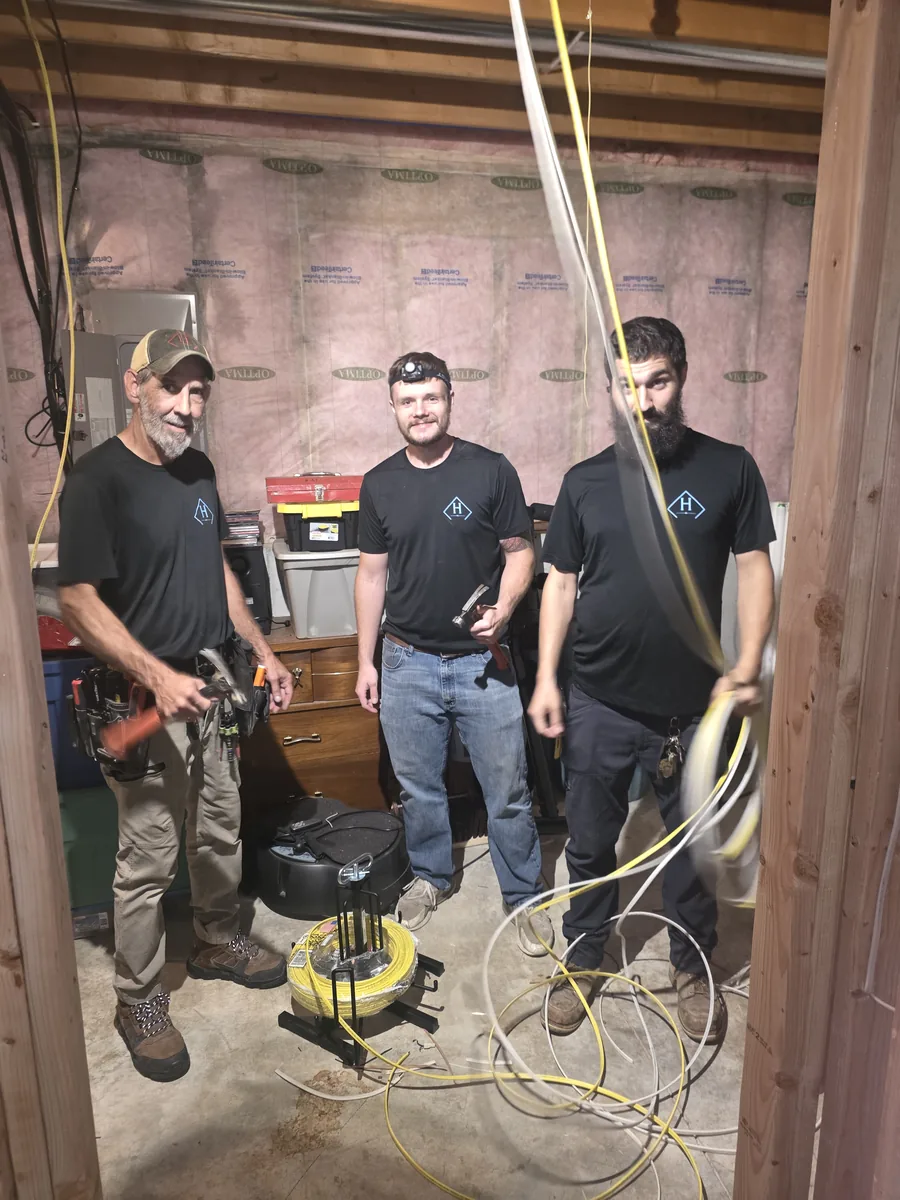
What moves the price of rewiring
We do not publish a dollar figure we cannot stand behind. What we can tell you is which parts of the job move the number.
| Job | Relative cost | What drives it |
|---|---|---|
| A single circuit or room | Baseline | One run replaced, usually where a problem showed up first: a kitchen, a bathroom, a bedroom that trips. |
| Kitchen and baths | Moderate | The rooms with the heaviest loads and the most code changes since the house was built. The most common partial rewire. |
| Knob-and-tube removal | Higher | Depends on how much is still live and how reachable the attic and basement are. Insurers often ask for this one. |
| Whole-house rewire | Highest | Every branch circuit replaced. Access decides it far more than square footage: plaster walls, finished basements and low attics add time. |
| With a panel upgrade | Priced together | Often done at the same time, since new circuits need somewhere to land. Cheaper together than as two jobs. |
We walk the house, look at what is there and where the access is, then give a flat price. Wall repair is spelled out in the quote so it is not a surprise.
What to Expect
Find out what you have
Test and trace the existing circuits. Some will be fine; the quote only covers what is not.
Plan the routes
Basement and attic first, walls only where there is no cavity to fish through.
Flat price, in stages if needed
Kitchen and baths, then the rest, or all at once. Your call, priced either way.
Rewire, inspect, patch
Permit and inspection before walls close. Openings patched and left ready for paint.
Questions We Get
How do I know if my house needs rewiring?
Warm or discolored outlets and switches, breakers that trip under normal use, lights that dim when something else turns on, a burning smell with no source, or wiring you can see is cloth-insulated or knob-and-tube. Any of those is worth an inspection. Age alone is not a reason; condition is.
How much does it cost to rewire a house?
It depends far more on access than on size. A house with an open basement and a walkable attic rewires much more easily than one with plaster walls, a finished basement and a low attic. We quote flat after walking it, and we often break it into stages so the most important rooms are done first.
Do you have to tear out the walls?
No. Most new circuits are fished through the existing wall cavities from the basement and attic. Small openings are made where a run cannot be fished, then patched. Whole walls come down only if they were coming down anyway for a remodel.
Is knob-and-tube wiring dangerous?
Not automatically. Intact knob-and-tube in good condition is not on its own a hazard. It becomes one when the insulation has gone brittle, when it is buried in attic insulation it was never designed for, or when modern loads are run on it. Many insurers will not write a policy while it is live, which is often what decides the timing.
What about aluminum wiring?
Aluminum branch wiring from the 1960s and 70s is a known issue at the connections, not the wire itself. The fixes are replacing the circuits, or making the connections with devices and connectors rated for aluminum. We will tell you which makes sense for your house.
Can I stay in the house during a rewire?
Usually yes. We work room by room or circuit by circuit so most of the house has power most of the time, and we tell you in advance when a room will be without it.
Ready to Get Started?
Call, text, or request a free quote online — we typically respond within one business day.