Electrical Safety Inspection
An honest inspection tells you three things: what is dangerous, what is out of date but fine, and what a buyer’s inspector is going to write down. Most people only find out the third one at the worst possible time.
What we actually look at
The panel and what feeds it: the service size, the breakers, whether the brand has a recall history, how the neutrals and grounds are landed, and whether anything in there is running hot. Then grounding and bonding, because it is the part that silently fails and the part that matters when something goes wrong.
Then the house: receptacles and switches tested for polarity and ground, GFCI protection where the code wants it, smoke alarm placement and age, visible wiring in the basement and attic, and anything that has been added over the years by somebody who was not an electrician. You get a written list, sorted by what actually matters.
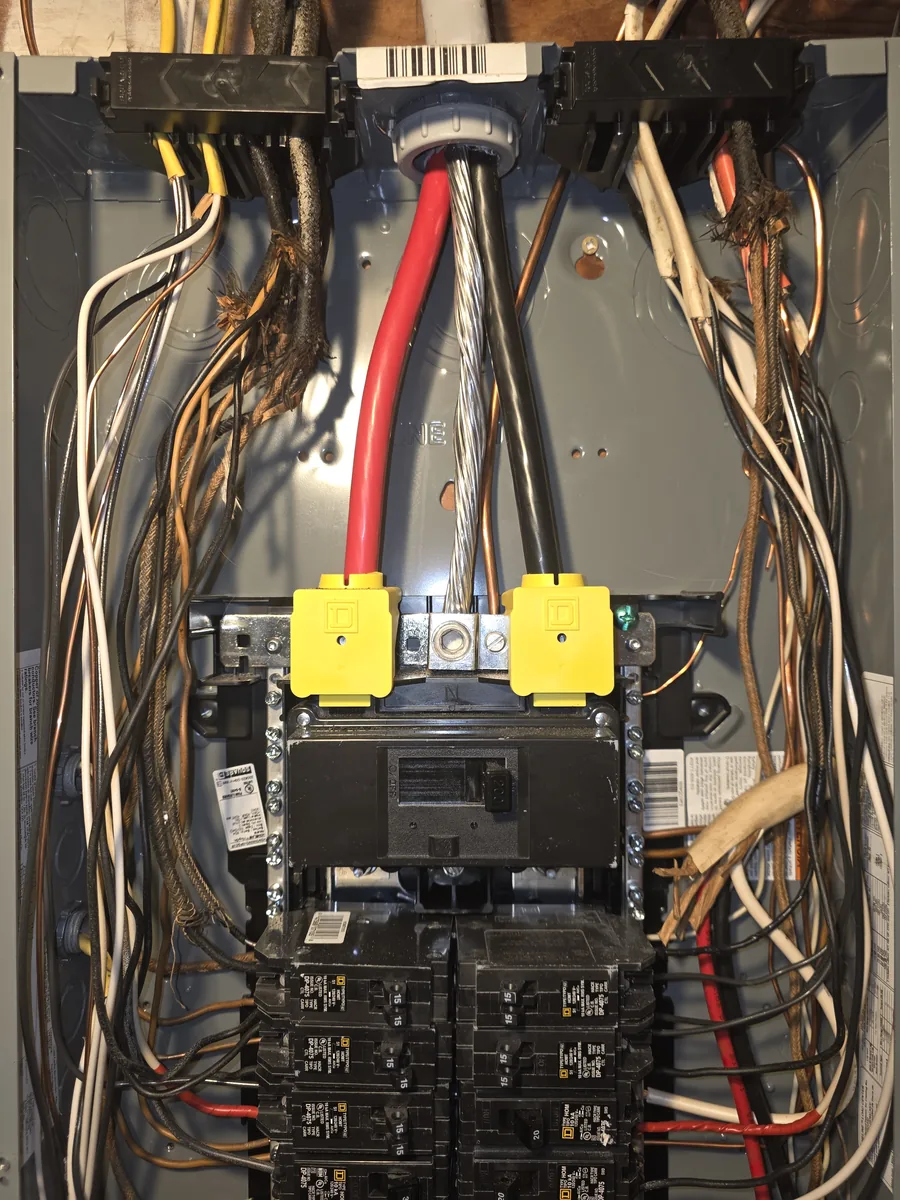
When an inspection is worth it
We do not publish a dollar figure we cannot stand behind. What we can tell you is which parts of the job move the number.
| Job | Relative cost | What drives it |
|---|---|---|
| Buying a house | Most common | Before closing, or after a general inspector writes “recommend evaluation by a licensed electrician” on the report. |
| Selling a house | Cheapest time | Find what the buyer’s inspector will find, while you still have time to decide what to do about it. |
| Insurance asking questions | Common | Knob-and-tube, Federal Pacific or Zinsco panels, or aluminum branch wiring. Insurers ask; a written report answers. |
| A house over 40 years old | Worth doing once | Especially if nothing has been touched since. Most of Kansas City’s housing stock qualifies. |
| Before a big addition or load | Sensible | A hot tub, an EV charger, a shop, or a finished basement. Better to know the service is up to it first. |
Flat price, quoted before we come out. The report is yours whether or not you have us do any of the work.
What to Expect
Walk the service
Meter, service entrance, panel, grounding and bonding. Thermal readings on the panel while it is under load.
Test the house
Receptacles, switches, GFCI and AFCI protection, smoke alarms, visible wiring in basement and attic.
Write it down
Three lists: dangerous, dated but fine, and cosmetic. In plain language, with photos.
Talk it through
What we would do first if it were our house, what can wait, and what does not need doing at all.
Questions We Get
What does an electrical safety inspection include?
The service and panel, grounding and bonding, receptacles and switches, GFCI and AFCI protection, smoke alarms, and any visible wiring in the basement, attic and garage. You get a written report separating what is dangerous from what is simply old, with photos.
How much does an electrical inspection cost?
It is a flat price, quoted before we come out, and it depends on the size of the house and the number of panels. The report is yours to keep whichever electrician does the work afterwards.
My home inspector said “recommend evaluation by a licensed electrician.” What now?
That line appears on most inspection reports and usually means the inspector saw something outside their scope: an unfamiliar panel brand, a double-tapped breaker, or old wiring. We evaluate it properly and tell you whether it is a real problem, which is often a cheaper answer than the one people fear.
Is knob-and-tube wiring automatically unsafe?
No. Intact knob-and-tube in good condition is not on its own dangerous. What makes it a problem is age-brittle insulation, connections buried in insulation, modern loads on old circuits, and insurers who will not write a policy while it is live. We report its condition rather than its reputation.
Do you inspect panels with a recall history?
Yes, and we look at them carefully. Federal Pacific and Zinsco panels have a documented record of breakers failing to trip. If you have one, you should know before an insurer or a buyer tells you.
Will you try to sell me work off the inspection?
We will give you the list and what we would do first. Plenty of it is often nothing. The report is written so another electrician could act on it, which is the point.
Ready to Get Started?
Call, text, or request a free quote online — we typically respond within one business day.