Electrical Repair and Troubleshooting
Most electrical repairs are not really about the part that failed. They are about finding why it failed, and that is the half of the job people skip. We trace the circuit first, then fix the thing that is actually wrong.
Find the fault, then fix it
A dead outlet, a light that flickers, a breaker that trips every time the microwave runs: each one has a cause somewhere on the circuit, and it is rarely where the symptom shows up. A loose neutral two boxes upstream, a push-in connection that has lost its grip, a breaker that has worn out, or simply too much on one circuit.
Swapping the part where the symptom appears is how a repair turns into a callback. We test first, find the connection or the load that is causing it, and tell you what we found before we fix it. Then you get a flat price for the fix.
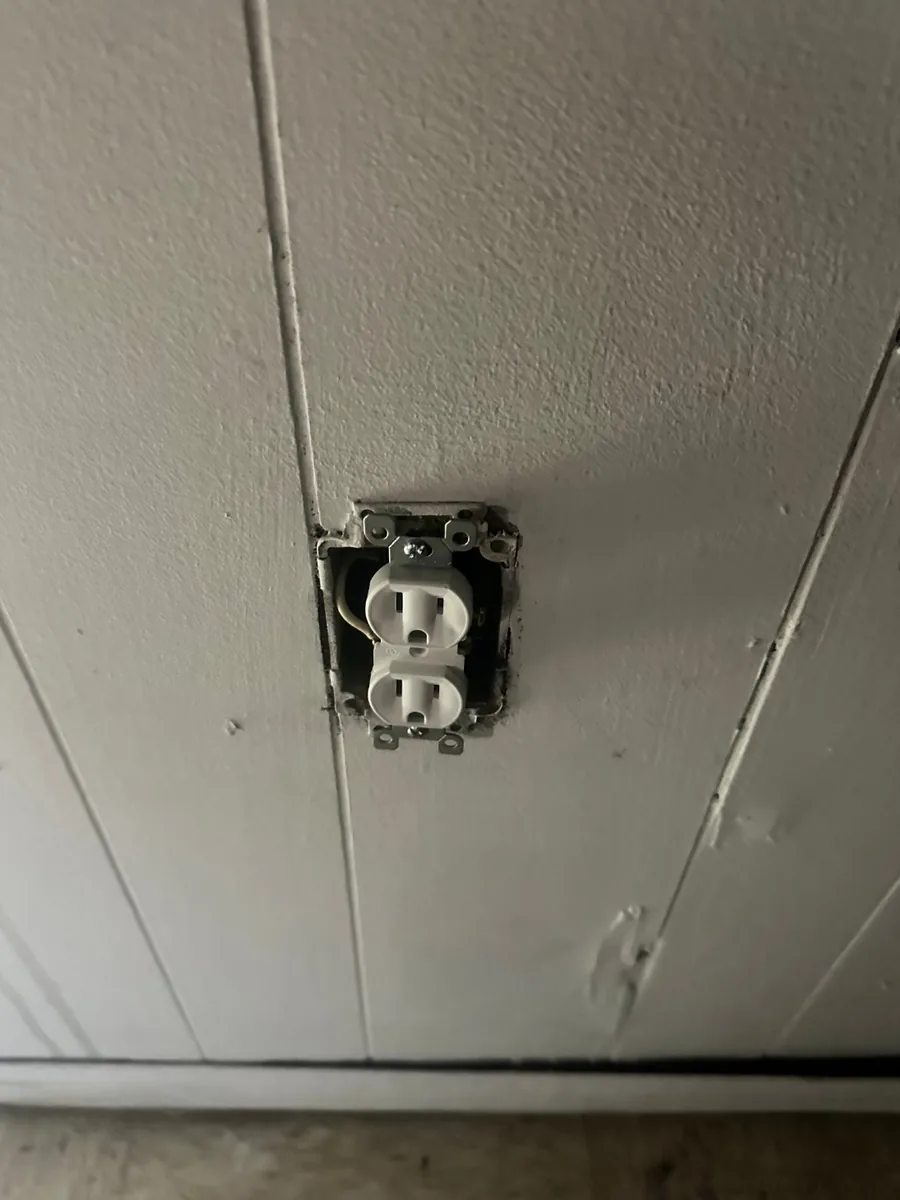
The repairs we are called for most
Four problems account for most repair calls. Each has a usual cause, and each can have a less usual one that matters more.
A breaker that keeps tripping
Usually too much on one circuit: a space heater and a hair dryer on the same run. Sometimes a worn-out breaker, and sometimes a real fault in the wiring or an appliance. If it trips again the moment you reset it, leave it off and call.
Circuit breaker replacement
Breakers wear out, and some older brands were never reliable to begin with. We replace like for like where the panel is sound, or tell you plainly when the panel is the problem rather than the breaker.
Outlets or lights that went dead
Almost always a failed connection upstream, or a tripped GFCI in another room protecting this one. Everything past the fault goes dark at once, which is the clue we follow.
Flickering or dimming lights
One fixture flickering is usually the bulb or the fixture. Lights across the house dimming when something big starts is a loose connection or a service problem, and that one is worth a call soon.
What moves the price of an electrical repair
We do not publish a dollar figure we cannot stand behind. What we can tell you is which parts of the job move the number.
| Job | Relative cost | What drives it |
|---|---|---|
| Replacing a failed device | Baseline | An outlet, switch or single breaker that has worn out, once we know it is the cause. |
| Tracing a fault | Depends on the hunt | A loose connection behind one of a dozen boxes takes longer to find than to fix. Access decides most of it. |
| Circuit breaker replacement | Lower | A like-for-like breaker in a sound panel. Obsolete or recalled panels change the answer. |
| Splitting an overloaded circuit | Higher | A new circuit from the panel so the kitchen or the workshop stops tripping. Panel space and distance drive it. |
| Hardwired smoke and CO detectors | Per detector | Replacing old units, or adding interconnected detectors so one alarm sets off the rest. |
You get a flat price for the fix before we start it. The diagnosis tells us what that price is.
What to Expect
Tell us the symptom
What stopped, when it started, and what else was running. That narrows it down before we arrive.
Test and trace
Meter on the circuit, following it from the symptom back to the cause.
Explain and price
What failed, why, and a flat price to fix it. Your call from there.
Fix and verify
Repaired, tested under load, and the circuit labelled if it was not.
Questions We Get
Why does my breaker keep tripping?
The three usual reasons: too much on one circuit (the most common), a breaker that has worn out, or a fault in the wiring or an appliance. An overload trips after a while, usually when something big runs. A fault often trips the instant you reset it, and that one should stay off until someone looks at it.
Is it dangerous if a breaker keeps tripping?
The breaker is doing its job, so the trip itself is the safe part. The danger is what caused it, and repeatedly resetting a breaker that trips straight away can make a fault worse. If it trips again immediately, or you smell burning, leave it off and call.
Can you replace a circuit breaker?
Yes. If the panel is sound, a like-for-like breaker is a short job. If the panel is an obsolete or recalled brand, we will say so, because a new breaker in a failing panel is money spent in the wrong place.
Why did my outlet stop working when the breaker is not tripped?
Usually a tripped GFCI outlet somewhere else on the same circuit (check the kitchen, bathrooms, garage and outside), or a failed connection in a box upstream. If resetting every GFCI does not bring it back, the fault is in the wiring and it is worth having it traced.
Do you install hardwired smoke detectors?
Yes. We replace hardwired smoke and carbon monoxide detectors and add interconnected ones, so an alarm in the basement sounds upstairs too. The National Fire Protection Association advises replacing smoke alarms every 10 years; the date is printed on the back of the unit.
Do you do small electrical repairs?
Yes. A single dead outlet or a switch that has quit is a normal call for us, not a nuisance. It is also often how we find the bigger problem behind it.
How much does an electrical repair cost?
It depends on how long the fault takes to find more than on the part. We give you a flat price for the fix once we know what is wrong, before any work starts.
Ready to Get Started?
Call, text, or request a free quote online — we typically respond within one business day.